



Migration to the UK remains a key topic of discussion, shaping policies, economic strategies, and public sentiment. In 2024, an estimated 1.2 million people migrated to the UK, marking a significant shift from previous years. This provisional figure for the year ending June 2024 represents a 20% decrease compared to the same period in 2023. The factors driving these changes include shifts in policy, global events, and economic conditions both in the UK and abroad.
Table of Contents
Key Takeaways
- 1.2 million people migrated to the UK in 2024, a 20% decrease from 2023, reflecting stricter policies and economic factors.
- Net migration fell to 728,000, marking a decline from 906,000 in 2023, driven by increased emigration and reduced visa approvals.
- Non-EU migration dominates, with India, Nigeria, Pakistan, China, and Zimbabwe being the top sources of long-term arrivals.
- EU migration continues to decline, as Brexit-era rules require EU nationals to meet the same visa criteria as non-EU migrants.
- 36,816 migrants crossed the Channel in small boats, despite tougher border policies, with Afghans, Syrians, and Iranians making up the majority.
- Asylum applications hit a record high of 108,130, the highest since 1979, with Pakistan, Afghanistan, and Iran leading in claims.
- Government crackdown intensifies, introducing prison sentences for smugglers and citizenship restrictions for irregular migrants.
- Asylum backlog remains high, with 90,686 cases still awaiting a decision at the end of 2024.
- Compared to Europe, the UK received fewer asylum claims than Germany, France, or Italy, but migration remains a key political issue.
- Further restrictions expected in 2025, including tighter work visa rules, family reunification limits, and stronger enforcement against illegal migration.
How Many People Migrated in 2024?
One of the most significant figures in migration data is net migration – the difference between the number of people entering and leaving the UK.
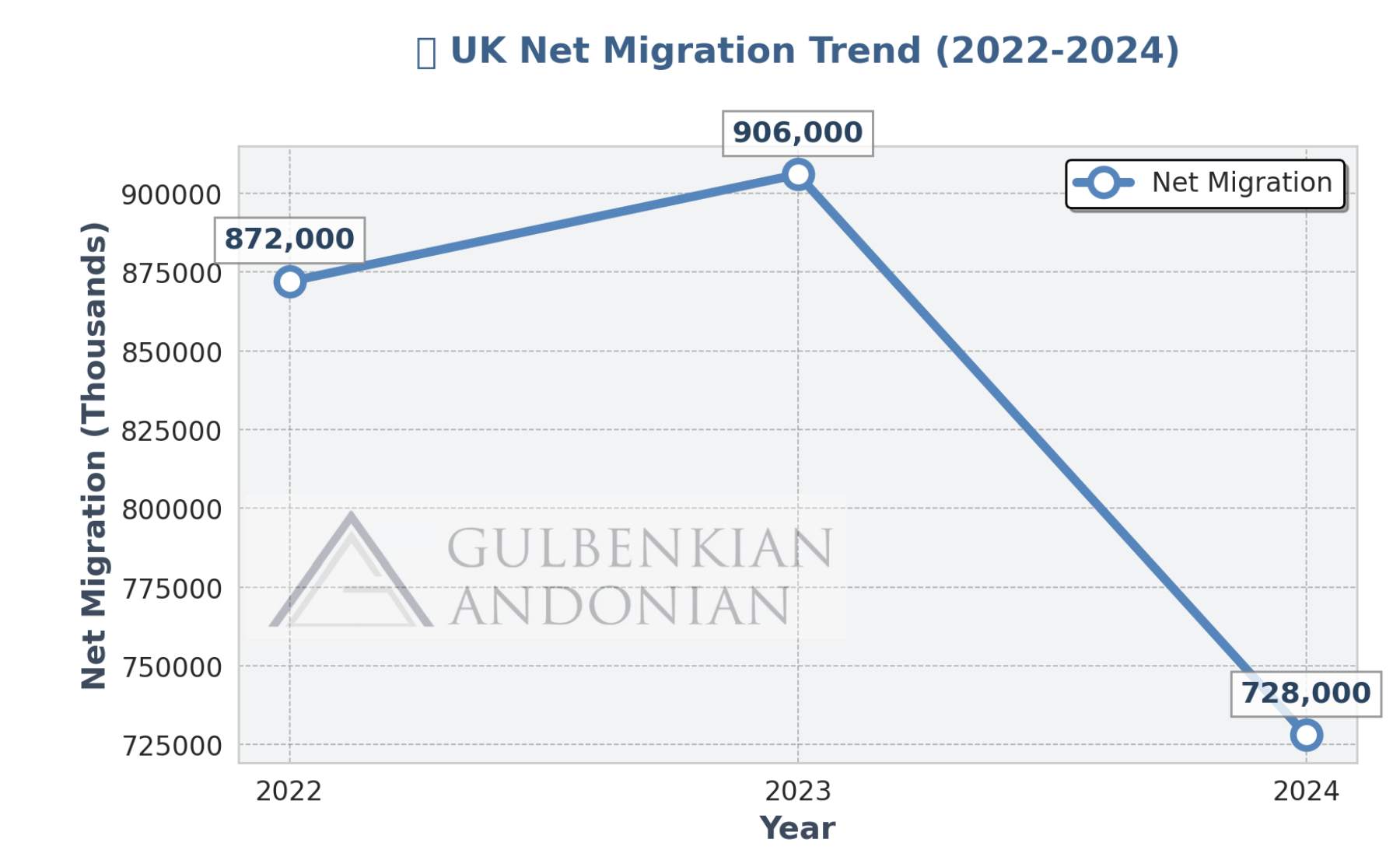
For the year ending June 2024, net migration stood at 728,000. While this number remains high compared to pre-2021 levels, it indicates a reduction from the peak migration figures recorded in 2022 (872,000) and 2023 (906,000).
Several factors have influenced net migration. Post-pandemic recovery, changing work opportunities, and the UK’s evolving immigration policies have played a role in both attracting and limiting migration. Additionally, stricter visa regulations and increased scrutiny on certain visa categories have contributed to a decline in the number of new arrivals.
Who Migrated to the UK in 2024?
Migration patterns are often shaped by economic and geopolitical factors. In 2024, a notable shift occurred in the composition of those arriving in the UK.
- British Nationals Returning: The majority of migrants in 2024 were British nationals, making up 55% of all arrivals. This includes returning expatriates, individuals relocating for work, and families choosing to move back after spending time abroad.
- Non-British Arrivals: Among non-British migrants, the largest category comprised short-term visitors. This group includes tourists, business visitors, and those entering the UK for temporary stays.
- Work, Study, Family, and Humanitarian Migration: While short-term visitors made up the majority of non-British arrivals, a smaller number entered the UK for employment, education, family reunification, or humanitarian reasons.
The Changing Face of European Migration
The impact of Brexit on UK immigration has been evident since the 2016 referendum. In 2024, the number of people migrating from the European Union continued its decline. While some EU nationals still move to the UK for work or study, the overall trend reflects the ongoing reduction in EU migration.
One of the reasons for this decline is the UK’s new immigration system, which places EU and non-EU migrants under the same framework. With the end of free movement, EU nationals now face the same visa requirements as those from other parts of the world. This has led to a drop in EU-based migration, particularly in lower-skilled sectors where employers previously relied on EU workers.
Increase in Non-EU Migration
Although EU migration has declined, the number of people migrating from non-EU countries has increased significantly since 2021. In 2024, this trend continued, with many non-EU nationals arriving under work, study, and family routes.
Several factors have contributed to the rise in non-EU migration:
- Work Visas: The UK remains an attractive destination for business immigration i.e. skilled professionals – particularly in sectors facing labour shortages such as healthcare, technology, and engineering.
- Student Visas: Universities in the UK continue to attract large numbers of international students. However, changes to student visa rules in 2024, including restrictions on bringing dependants, have slightly reduced the number of international students compared to previous years.
- Family and Humanitarian Routes: The UK has granted visas to individuals relocating for family reunification, as well as to those seeking asylum or humanitarian protection. Global conflicts and crises have influenced migration patterns, with the UK offering visas under specific resettlement schemes.
Key Migration Statistics for 2024
Individual Immigration to the UK is not limited to long-term settlement. Many people enter the UK for short-term visits, business travel, and transit purposes.
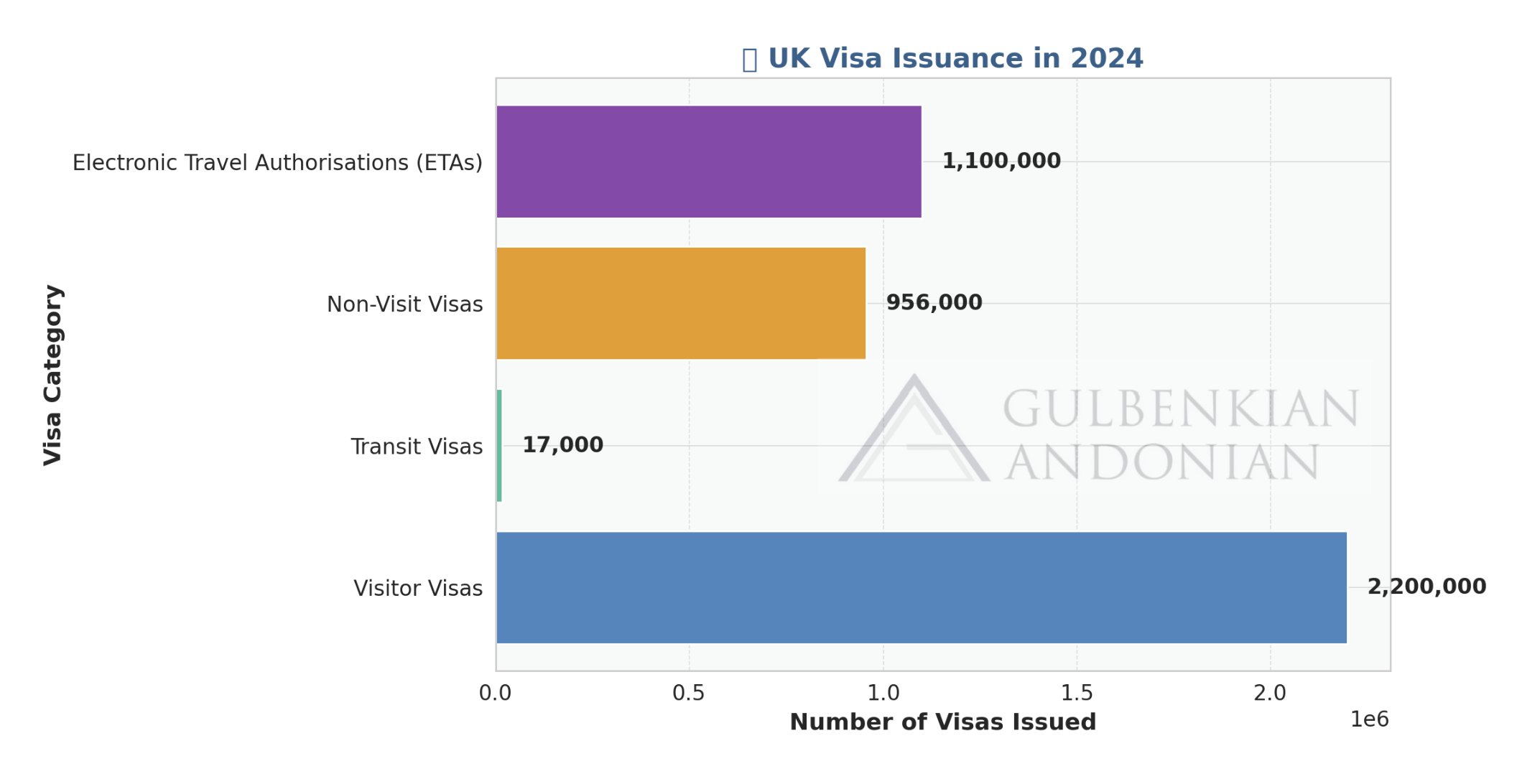
In 2024, several key figures highlight the broader picture of migration:
- Visitor Visas: A total of 2.2 million visitor visas were granted, reflecting the strong demand for short-term travel to the UK. This category includes tourists, business travellers, and those visiting family and friends.
- Transit Visas: The UK issued 17,000 transit visas to individuals passing through the country en route to another destination.
- Non-Visit Visas: A total of 956,000 visas were issued for non-visit purposes, including work, study, family, and humanitarian routes.
- Electronic Travel Authorisations (ETAs): In 2024, the UK introduced the ETA system for certain nationalities. By mid-year, 1.1 million ETAs had been granted, allowing travellers from eligible countries to enter the UK without a traditional visa.
What Is Driving the Changes in Migration?
The 20% decrease in overall migration compared to 2023 can be attributed to several factors:
- Stricter Immigration Policies: The UK government has implemented tighter visa rules, particularly for work and study routes. New salary thresholds for skilled workers and restrictions on student dependants have impacted migration numbers.
- Economic Considerations: The cost of living crisis and economic uncertainty may have influenced migration decisions. Some individuals may have postponed plans to move to the UK due to financial constraints.
- Global Events: Geopolitical tensions, conflicts, and economic instability in other parts of the world continue to shape migration flows. While some individuals have sought refuge in the UK, others have opted for alternative destinations.
- Post-Pandemic Normalisation: Migration patterns fluctuated significantly in the years following the COVID-19 pandemic. The return to more stable trends has contributed to a decrease in migration numbers compared to 2023.
How Many Migrants Have Crossed the Channel in 2024?
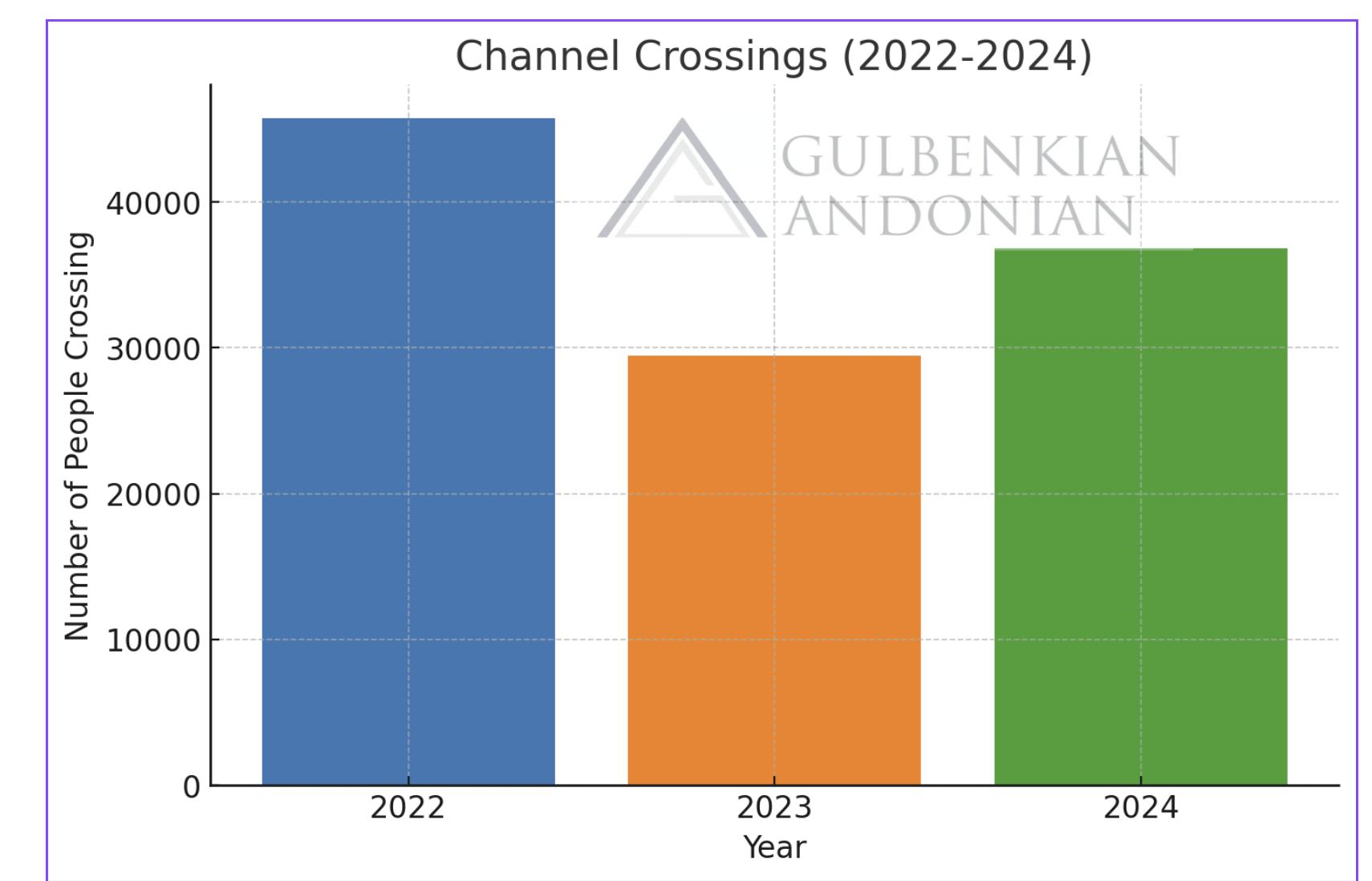
Despite government crackdowns, Channel crossings remained high in 2024, with 36,816 people making the journey, including 23,000 after Labour took office in July.
This follows 45,755 crossings in 2022 and 29,437 in 2023.
Since 2018, over 150,000 migrants have arrived via small boats.
The highest number of arrivals (23,000) occurred after the Labour government took office in July 2024.
Since 2018, more than 150,000 people have arrived via small boats.
Government Crackdown on People Smuggling
In response to rising Channel crossings, the UK government introduced tough new measures under the Border Security, Asylum, and Immigration Bill:
- A new offence for endangering lives at sea, carrying a jail term of up to five years.
- People smugglers will face up to 14 years in prison for acts in preparation for smuggling, such as purchasing boat parts.
- Stricter citizenship rules, meaning those entering via irregular routes (such as small boats) will normally be refused British citizenship.
Who Is Crossing the Channel?
According to Home Office figures, the majority of those arriving via small boats in 2024 came from:
- Afghanistan
- Syria
- Iran
- Vietnam
- Eritrea
These five nationalities accounted for 61% of all arrivals.
Deaths in the Channel
2024 was the deadliest year on record, with 78 migrant deaths recorded. Since 2018, at least 225 people have lost their lives attempting the crossing.
Why Are UK Asylum Applications at a Record High?
The record-high asylum applications in 2024 reflect a combination of global instability, Channel crossings, backlogs in processing, and changes in migration policies. While the UK government is introducing stricter enforcement measures, including tougher deportation policies and restrictions on irregular migrants gaining citizenship, the asylum system remains under pressure.
- More than 108,130 people claimed asylum in the UK in 2024, marking the highest number since records began in 1979.
- 32% of asylum seekers arrived via small boats.
- The top countries of origin were Pakistan, Afghanistan, and Iran.
- 267,200 Ukrainians were issued visas under separate resettlement schemes.
Backlog in Asylum Processing
- 90,686 cases (affecting 124,802 people) were awaiting a decision at the end of 2024.
- This marks a 5% reduction from 2023, but the backlog remains higher than pre-2022 levels.
Asylum Removals and Returns
- 8,200 people who had their asylum claims refused were removed in 2024 (a 28% increase from 2023).
- Since 2018, only 4,995 small-boat arrivals have been returned (just 3% of total arrivals).
How Does the UK Compare to Europe?
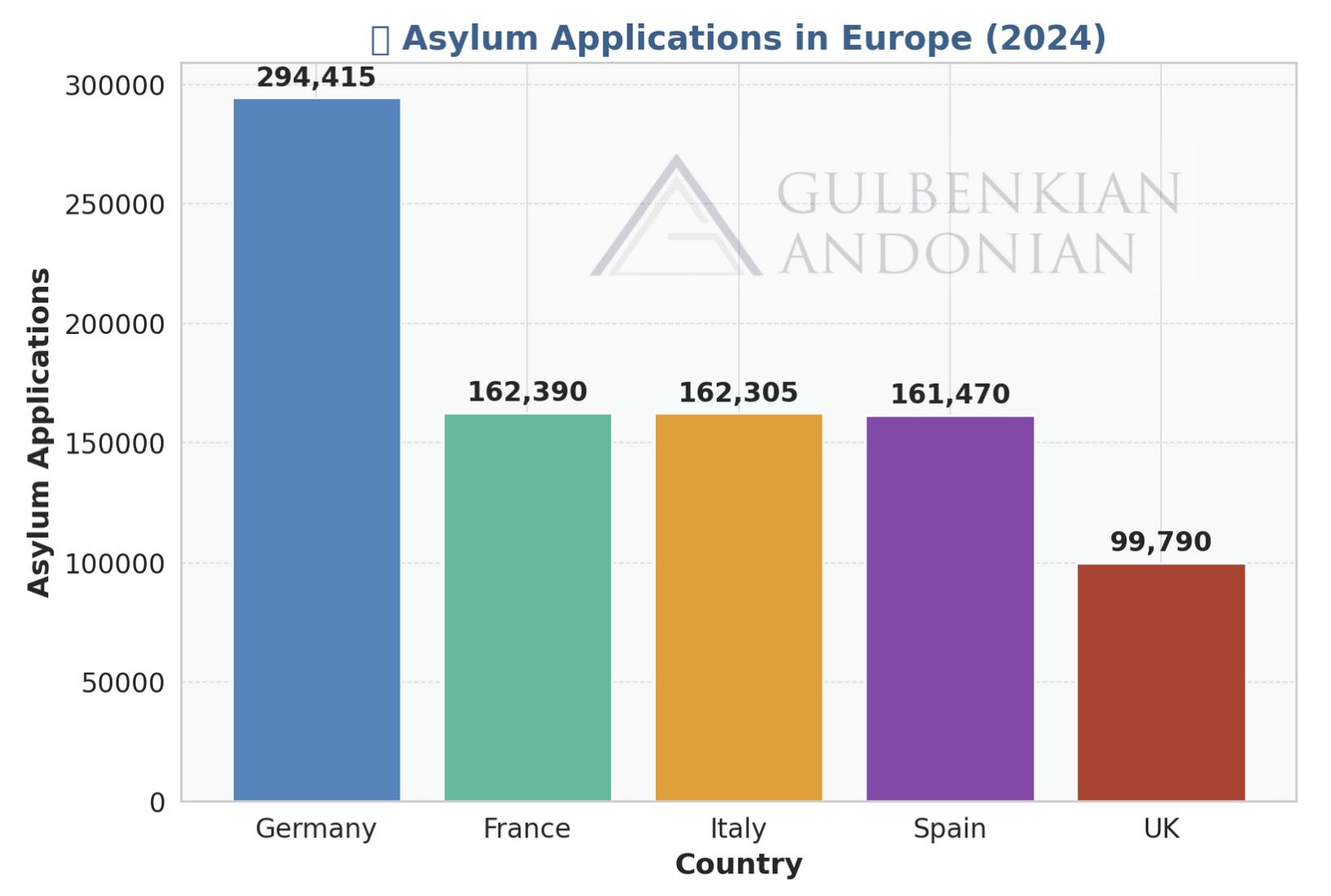
While UK asylum numbers have risen, they remain lower than in many European countries:
- Germany received 294,415 applications – the highest in Europe.
- France, Italy, and Spain each received over 160,000 applications.
- The UK received 99,790 applications, significantly lower than Germany or France.
The Future of UK Migration
Looking ahead, migration trends in the UK will continue to evolve based on policy decisions, economic conditions, and global events. The UK government has indicated a desire to reduce net migration further, with proposals to tighten eligibility for certain visas.
Employers, particularly in sectors reliant on international talent, are closely monitoring these changes to assess their impact on workforce availability. For individuals considering moving to the UK, understanding the latest visa rules and requirements is essential.
The introduction of digital systems, such as ETAs, marks a shift toward more streamlined immigration processes, but applicants must remain aware of any policy updates. As policies continue to change, the landscape of UK migration will remain an important topic for policymakers, businesses, and individuals alike.
To Sum Up
Migration remains a dynamic and complex issue for the UK. While 2024 saw a decrease in migration compared to 2023, significant numbers of people continue to move to the UK for work, study, family, and humanitarian reasons. The decline in EU migration has been counterbalanced by rising numbers of non-EU arrivals, reflecting global shifts in migration patterns.
Whether these trends continue in the coming years will depend on economic conditions, policy adjustments, and international events that shape migration flows.
For personalised advice on UK visas, work permits, or family immigration, contact our expert team today.
Information in this article was taken from ONS.gov.uk and from the BBC
At Gulbenkian Andonian, we pride ourselves on “Excellence, Experience and Efficiency”. With over 35 years of experience on your side, our team of London based lawyers and solicitors have a wealth of experience advising individuals, families and businesses of all sizes to find clarity on UK law. Call us on +44 (0) 207 269 9590 or fill out the form below. We usually reply within a few hours.Ask our Expert Legal Team


Dr Bernard Andonian is the Co-Founder of Gulbenkian Andonian Solicitors and a leading authority in UK immigration, human rights, family and civil litigation law. With over 40 years of experience, he brings a wealth of legal knowledge and courtroom expertise. A former Judge and a recipient of a PhD in Law from the University of West London, Dr Andonian has served on the Law Society’s Immigration Law Panel, where he played a key role in shaping national legal standards. His name is featured in the Legal 500 Hall of Fame, recognising his consistent excellence and influence in the field. Known for his practical approach and deep understanding of immigration law, he is frequently consulted for commentary on policy changes and legal reform.
